
The Beyond the Budget Series: Big Ambitions, Investable Propositions?
If devolution is the clearest thread running through Burnham’s premiership, investment is where it is being tested most directly.
In 2025, the UK’s Modern Industrial Strategy laid the foundations for a more place-based approach to attracting private investment, with mayoral authorities tasked with developing Local Growth Plans and investment pipelines to drive regional growth.
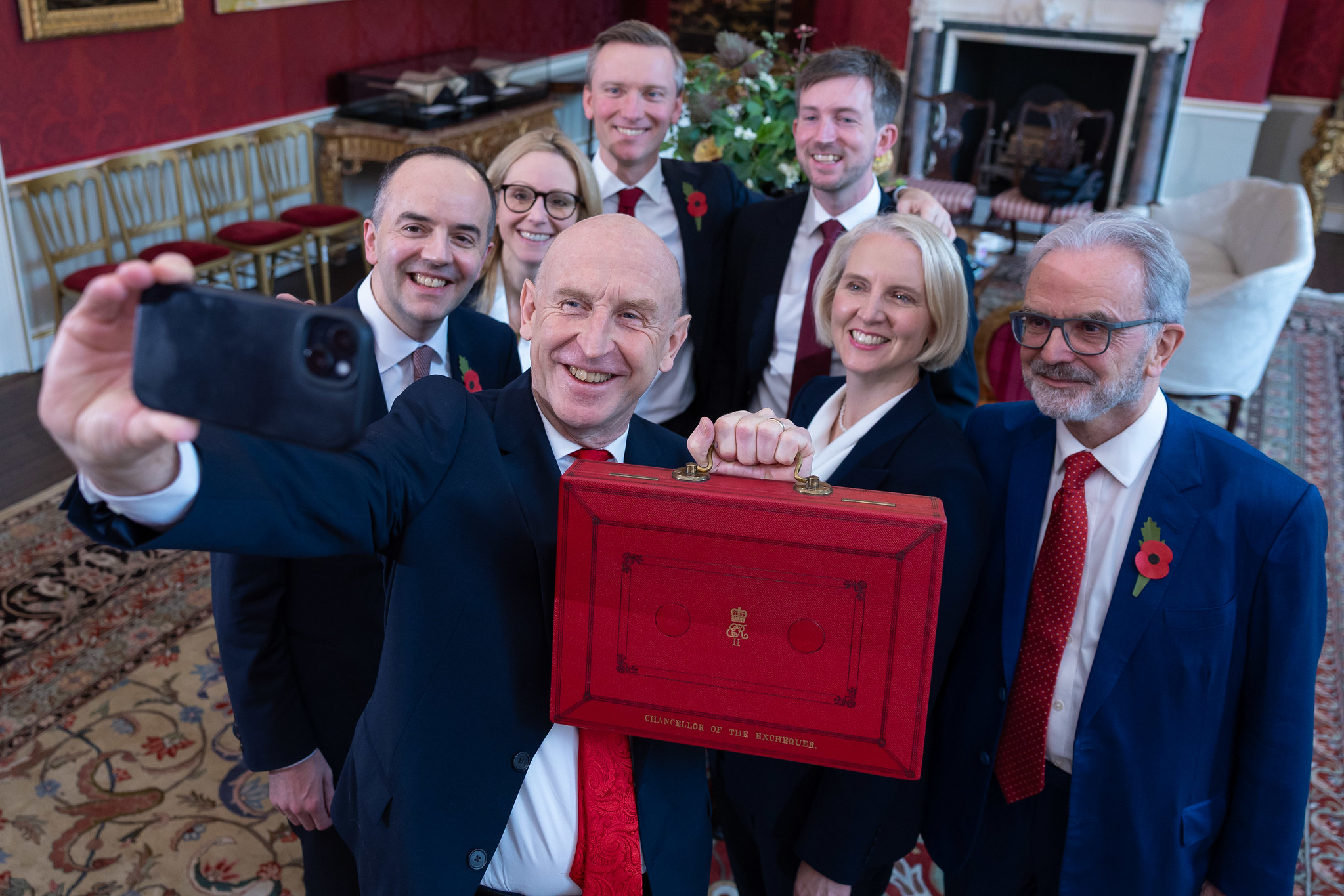
Less than eighteen months and one change of Prime Minister later, Mayoral Strategic Authorities (MSAs) are now expected to become the main drivers of local economic growth. The October 2026 Budget reinforced that ambition, with interventions designed both to channel private capital into places and give MSAs greater control over attracting it themselves.
From an additional £15.4 billion for the National Wealth Fund to the £700 million Strategic Sites Accelerator (SSA) programme, alongside local investment targets for Local Government Pension Schemes, the Government is intervening directly to crowd in private investment. Alongside these, business rates retention, a £1.5 billion borrowing facility and £150 million in capacity funding aim to give MSAs the fiscal firepower to attract investment themselves.
These are welcome steps. But, as with devolution more broadly, the direction is clearer than the destination. The Government is giving places more tools to attract investment, but are their investment opportunities investment-ready?
Three challenges stand out: turning investment pipelines into investable propositions, developing the capability to deliver, and deciding which opportunities to prioritise.
From Pipelines to Propositions
Over the past year, MSAs have launched their investment prospectuses, identifying almost £80 billion of opportunities between them, according to the Regional Investment Readiness Review (RIRR) we produced for Standard Life. But an investment pipeline is not the same as an investable proposition.
The very existence of the SSA, a scheme designed to tackle barriers such as planning, grid connections and access to utilities, recognises that many strategic sites, even commercially viable ones, will not become investment-ready without intervention. The Government is expecting it to unlock up to £2 billion of private investment, with just six to ten sites expected to receive a share of the £700 million. But even for places that miss out, there are lessons to be learned.
Delivered jointly by the Office for Investment and the National Wealth Fund, the SSA showcases the Government's role in fixing viability gaps and offers a useful indication of what makes a proposition investable. Its criteria, covering market demand, value for money, delivery capability and the ability to secure private funding, provide a starting point for MSAs to assess their own pipelines. The trailed sifting process also demonstrates the level of detail required, from robust financial information and a clear understanding of delivery barriers to evidence of a site's strategic and economic impact.
Of course, not every opportunity will require the same level of intervention. But places need to understand not just where investment could happen, but what it will take to make it happen. For investors, that means clear information on planning status, capital requirements, ownership, commercial models, risk allocation and delivery routes, detail the RIRR found many prospectuses still lack. A handful of opportunities worked up to this standard will do more to attract capital than dozens that are not.
That brings us to the next challenge: do MSAs have the capability to work their opportunities up to that standard?
The Capability Conundrum
The skills gap is hardly new. In 2025, Parliament's Public Accounts Committee warned that shortages of specialist commercial and financial expertise were putting the Government's infrastructure ambitions at risk, particularly where projects depend on private finance.
Our conversations with mayoral and non-mayoral strategic authorities suggest this challenge goes further, limiting their ability not only to attract and leverage investment, but also to deliver the wider ambitions of their Local Growth Plans.
The Government has responded, announcing a £150 million uplift in capacity and capability funding and a forthcoming MSA capability assessment to inform funding baselines for the 2027 Spending Review. The National Wealth Fund is also expanding its strategic partnerships programme, giving more areas access to investment expertise and project-level advice.
These are welcome steps. But what does the capability to attract private investment actually look like?
Part of the challenge is that the public and private sectors have long approached investment differently. HM Treasury's Green Book provides the framework for assessing the wider economic and social value of public interventions, while private investors focus on financial returns and risk. Both perspectives matter, but a business case designed to secure public funding will not necessarily make the commercial case for private investment.
The skills places need sit somewhere between the two: people who can bridge public and private sector perspectives, turning opportunities that deliver public value into commercially viable propositions.
A 2024 LGA and CIPFA report found that four in five councils struggled to recruit finance business partners, with commercial knowledge among the most sought-after skills. Our engagement with MSAs points to a similar challenge: regions most successful in attracting investment often rely on a handful of individuals with experience spanning public and private finance. Yet these individuals are difficult to recruit, with no clearly defined career path or CV.
Whilst the MSA capability assessment should help identify where gaps are greatest, we first need to understand exactly what mix of skills MSAs need to make the most of their new investment toolkit.
And this raises a further question: what does this mean for places still at the start of their devolution journey? Many of the Budget's announcements, from the £1.5 billion borrowing facility to an allocation of income tax receipts, were reserved for mayoral authorities. Areas yet to agree a mayoral deal have been offered £120 million of "incubator capital" as they move towards devolution, but they will still be competing for investment with fewer powers, less funding and, in many cases, smaller teams.
Whilst all of this is being worked through, MSAs and other authorities would benefit from engaging with investors early to better understand their requirements and what they need to do to meet them.
Priorities versus Place
The Government has made “good growth in every postcode” a central ambition, promising to deliver it by putting places in control of their economic futures. But with MSAs now expected to drive growth through private investment, what happens when the places that need investment most are not those investors want to back?
Even at the MSA level, we cannot escape the question of winners and losers. Investors will favour opportunities with the strongest commercial case, and even schemes such as the SSA, which weigh strategic impact alongside value for money, can back only a handful of sites. Our RIRR found that places should focus on a smaller number of high-potential opportunities rather than spreading their efforts across dozens. Not every opportunity can, or should, be taken forward.
This creates a tension with the Government’s central ambition. In 2021, the Centre for Progressive Policy found that productivity gaps within most English regions were wider than those between them. Attracting investment into a region is not the same as spreading growth across it. Delivering on the Government's ambition will therefore require MSAs to consider how investment can reach areas that might otherwise be overlooked.
That is easier said than done. Opportunities in these areas may need greater public intervention to become commercially viable, stretching already limited resources further. And the more support required to unlock each opportunity, the fewer MSAs may be able to back.
There are tools that could help. Alongside the Budget, HM Treasury published guidance on place-based business cases, which could help places package weaker opportunities alongside stronger ones and make the case for investment across a whole area. Similarly, the new local investment targets for Local Government Pension Schemes could provide more patient capital for opportunities with longer-term returns.
But having the tools is one thing. The 2025 Green Book review found that places already struggle with the expertise and capacity needed to develop standard business cases, let alone more complex ones. And even then, there is no guarantee that the resulting propositions will be commercially viable or meet investor requirements.
The fundamental tension remains: attracting private investment and spreading growth across a region are not always the same thing. Places will inevitably face difficult choices about which opportunities to back and which to leave behind. But if the Government is serious about delivering "good growth in every postcode", can it leave those choices, and the consequences, entirely to places?
From Ambition to Investment
The Budget may have given MSAs more tools to attract private capital, but that does not mean they are ready to use them. To ensure that places are investment-ready, and using their resources in the most effective way, we need to tackle some fundamental questions:
- How can places turn investment opportunities into commercially viable propositions that attract private capital?
- What specific skills and expertise do MSAs need to make the most of their new investment toolkit? And how do we ensure non-mayoral strategic authorities are not left behind?
- With limited resources, how should places prioritise which opportunities to pursue, and what role should central government play in those decisions?
Ultimately, places do not lack ambition. A year of investment prospectuses proves that. But ambition alone will not attract private capital, and attracting capital alone will not guarantee growth across every postcode.
The real test is whether MSAs can turn their new powers and resources into investment that delivers for their regions. If not, the risk is that devolution quietly reverts to the old pattern: places asking, and Whitehall deciding.
Get in touch
We would love to hear from you. Get in touch at contact@henhamstrategy.co.uk, or through our contact page.

